Founder(s):
Vörös Luca 
Ecohydrological Research Base – when a thesis project is about protecting the Danube
What happens when an architecture student makes the relationship between water and nature the centerpiece of her thesis? That's exactly what Luca Vörös, our MSc student at YBL, did: she designed an ecohydrological research base on a special stretch of the Ráckeve-Soroksár Danube branch, Angyali Island.
Why Angyali Island?
The island can only be reached by boat, which has created a unique, secluded way of life for its residents — and it was precisely this isolation that inspired the idea of a place where researchers could study the interaction between water and ecosystems: the threats facing aquatic wildlife, the effects of climate change, and how water management can be aligned with the needs of nature.
The concept
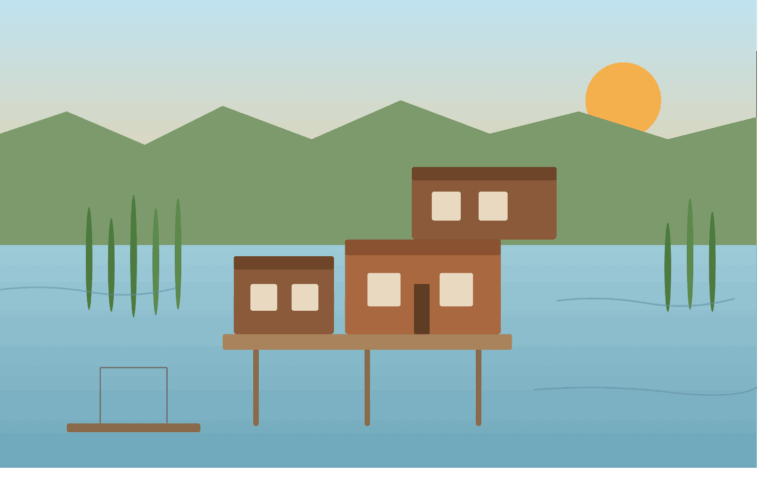
The design is anchored by a main path running across the island, linking three zones: the arrival point with a large dock and service building, temporary accommodation buildings for researchers and summer students, and finally the nature trail with the research lab, raised on a boardwalk above the reed beds.
Sustainability at every level
The buildings are made primarily from repurposed shipping containers, lined inside with warm-toned wood fiber panels, and clad outside in a special grating that lets vegetation grow freely through it — so construction doesn't push nature out, but integrates it. The building systems also aim for the smallest possible ecological footprint: a composting toilet, well-based water supply, and a reed-bed wastewater treatment system that turns the Danube-side reed bed into a living, functional part of wastewater treatment.
The project shows that a thesis can be more than a formal exercise — it can offer a genuine answer to how a sensitive natural area might be used in the future, making room for research, education, and nature conservation all at once.